

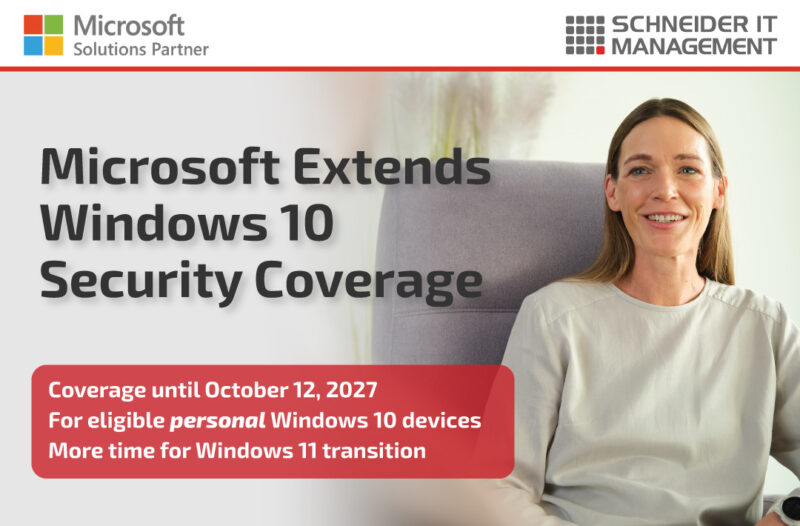
Stay protected longer while planning your Windows transition. Effective June 25, 2026, Microsoft extended the Windows 10 Extended Security Updates (ESU) program for personal use devices through October 12, 2027.
Summary
- Microsoft extended Windows 10 Extended Security Updates (ESU) for personal use devices by one additional year
- Coverage is now available through October 12, 2027
- The extension gives users more time to move to Windows 11
- ESU continues to provide critical and important security updates
- Windows 10 version 22H2 remains the prerequisite for enrollment
- Organizations should use this announcement as an opportunity to review broader Windows lifecycle and licensing considerations
Important note for readers
This article is provided for informational purposes only.
The Microsoft announcement discussed in this article concerns the Windows 10 Extended Security Updates (ESU) program for personal use devices, which Microsoft has extended through October 12, 2027.
SCHNEIDER IT MANAGEMENT exclusively advises commercial customers, public sector organizations, and other business entities on software licensing and cloud procurement topics.
We do not provide licensing advice, procurement services, consulting, or support for private individuals.
Organizations looking for information about Microsoft Extended Security Updates in business environments should instead refer to our article on cloud-enabled Windows 10 Extended Security Updates:
https://www.schneider.im/microsoft-windows-10-cloud-enabled-extended-security-updates/
What is changing?
Microsoft has extended the consumer Windows 10 Extended Security Updates program through October 12, 2027.
The program allows eligible personal devices to continue receiving critical and important security updates after Windows 10 reaches end of support.
According to Microsoft, the change is intended to provide additional time for users to transition to a supported Windows platform.
What is Windows 10 Extended Security Updates (ESU)?
Windows 10 Extended Security Updates (ESU) is a Microsoft program that delivers critical and important security updates for eligible Windows 10 devices after the operating system reaches end of support.
ESU is focused exclusively on security updates. It does not include new features, feature enhancements, design changes, or general technical support.
The program is designed to reduce security risk during the transition from Windows 10 to a supported Windows version.
Who can use the consumer ESU program?
Microsoft states that consumer ESU is available for eligible devices running:
- Windows 10 Home
- Windows 10 Professional
- Windows 10 Pro Education
- Windows 10 Workstations
All devices must run Windows 10 version 22H2 and meet Microsoft’s enrollment requirements.
The consumer ESU program is not intended for commercial scenarios.

Customer benefits at a glance
- Additional flexibility for device replacement planning
- Continued access to security updates
- Reduced exposure to newly discovered vulnerabilities
- More time to complete operating system transition projects
- Better alignment of budget cycles and device planning
- Improved continuity for devices that cannot yet be replaced
Why this announcement is relevant
Windows 10 remains present in many environments. Organizations and individuals may still have devices that are not yet ready for replacement.
The updated ESU timeline provides a longer security coverage period for eligible personal devices.
For organizations, the announcement highlights the continued relevance of Windows lifecycle management and Extended Security Updates licensing considerations.
Licensing considerations
Organizations should evaluate whether Windows 11, Windows 365, Azure Virtual Desktop, or Windows 10 Extended Security Updates represent the most appropriate path for their environment.
Microsoft Product Terms continue to contain dedicated Windows 10 ESU licensing provisions, including coverage periods through 2027. Organizations should review the licensing implications that apply to their specific environment before making long-term support decisions.
For additional information about commercial Windows 10 ESU scenarios and cloud-enabled ESU options, see:
https://www.schneider.im/microsoft-windows-10-cloud-enabled-extended-security-updates/
Organizations should review the licensing implications of available support options and determine which Microsoft licensing model best aligns with their business requirements.
What organizations should do now
- Review all Windows 10 devices currently in production
- Validate Windows 10 version 22H2 where applicable
- Assess relevant Extended Security Updates licensing requirements
- Review Microsoft Product Terms applicable to your licensing program
- Evaluate available Windows support options from a licensing perspective
- Document future Windows lifecycle and licensing requirements

Ready to review your Windows licensing strategy?
Although Microsoft’s announcement concerns personal-use devices, SCHNEIDER IT MANAGEMENT focuses exclusively on business and enterprise licensing scenarios.
We help organizations assess:
- Microsoft licensing
- Windows lifecycle requirements
- Extended Security Updates licensing
- Windows 365 licensing
- Azure Virtual Desktop licensing
- Microsoft Product Terms and licensing changes
Contact SCHNEIDER IT MANAGEMENT for advice on Microsoft licensing, Windows lifecycle considerations, and Extended Security Updates licensing requirements for commercial environments.
Sources
For the announcement of Microsoft Windows 10: Personal Extended Security Updates Available Through October 2027, please visit:
For commercial Windows 10 Extended Security Updates information, please visit:
https://www.schneider.im/microsoft-windows-10-cloud-enabled-extended-security-updates/
For useful software licensing information on Microsoft products, please visit: